Ownership · 4 min read
How to Use a Home Hyperbaric Chamber
Follow pre-use checks, safe entry, pressurization, oxygen use, decompression, cleanup and routine care for a home hard-shell hyperbaric chamber.
Use a repeatable sequence for each home hard-shell chamber session: inspect the equipment, prepare the user, pressurize gradually, remain in contact, decompress fully and complete the after-use checks. Follow the operating values and control sequence specified for your model.
Before Every Session: Equipment Checklist
| Check | Ready for use when |
|---|---|
| Room and surroundings | The chamber is level and the room is ventilated, clear of clutter, and away from ignition sources and flammable liquids. |
| Shell, door and seal | The shell has no cracks, deformation or serious rust; the door and sealing ring are intact and sit in place. |
| Emergency pressure release | The manual release control moves freely and returns to its operating position after the check. |
| Hoses and connections | Air and oxygen lines have no visible wear, damage or kinks; fittings are secure and there is no audible leak. |
| Power, gauges and alarms | The cord is undamaged, power connections are not daisy-chained, and the pressure gauge, oxygen display and alarms work normally. |
| Call and intercom | The in-chamber call button and two-way intercom work on models equipped with them. |
| Interior | The chamber is clean, dry and free of paper, loose items and flammable materials. |
Prepare and Enter
- Do not self-use with cold-related nasal congestion, otitis media, pneumothorax, severe hypertension or a high-risk pregnancy.
- Do not start a session while fasting, after overeating or after drinking alcohol. For a first session, use a lower pressure and shorter duration as specified for the model.
- Wear cotton clothing. Leave phones, watches, jewelry, power banks, lithium-battery devices and metal items outside. Do not bring lighters, perfume, cosmetics, oils or synthetic clothing into the chamber.
- Check the oxygen mask and tubing, enter steadily, settle into position, then close and lock the door and confirm the seal.
Pressurize Gradually
- Set the pressure, session time and pressurization rate on the external controls, then start the system and allow it to raise pressure gradually.
- As pressure changes, equalize ear pressure with swallowing or gentle pressure-balancing movements.
- If ear pain becomes sharp or cannot be tolerated, pause pressurization and lower pressure gradually. Do not force through the pain.
For the broader chamber-safety checklist, see hyperbaric chamber safety. For a general session overview, see what to expect during a hyperbaric session.
At Operating Pressure
- Breathe normally and use the oxygen mask as directed for the model.
- Do not press cabin controls unnecessarily or lean against the door.
- Use the call button or intercom as soon as you feel unwell.
- If nausea, lip numbness or muscle twitching occurs, use the emergency depressurization procedure and exit the chamber.
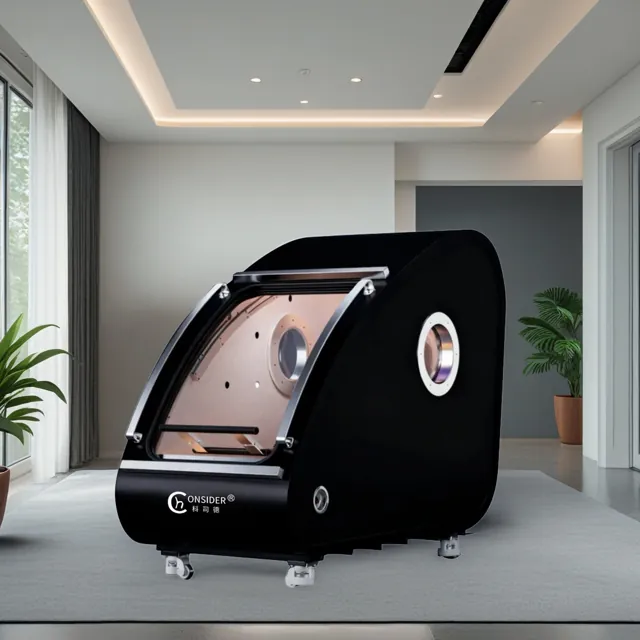
1.5–2.0 ATA · Single-Person Hard Shell
COHT20 — Single-Person Hard Shell Chamber
1.5-2.0 ATA Q355 carbon-steel single-person sitting chamber with an integrated oxygen system for clinics and professional facilities.
View COHT20 details →
Finish the Session and Exit
- Allow the equipment to complete a gradual depressurization. Breathe naturally and do not hold your breath.
- Wait until the pressure gauge returns fully to zero before opening the door. Do not manually interrupt the release sequence.
- Exit slowly and sit for a short rest. For the next two hours, avoid a hot bath, strenuous exercise and staying up late.
After-use Checks
- Close the air and oxygen supply, release residual line pressure as instructed, then switch off the main unit. Unplug it for long periods out of use.
- Wipe the chamber interior, headrest and mask, then ventilate and dry the interior.
- Check that the sealing ring is not pinched, shifted or damaged.
- Record the session time, pressure and any discomfort or unusual equipment behavior.
For filter, seal, valve and scheduled service tasks, use the hyperbaric chamber maintenance and care guide.
Weekly and Monthly Maintenance
| Schedule | Checks |
|---|---|
| Weekly | Test the manual emergency release, check hose fittings for leaks, clean the equipment intake filter, and clean and ventilate the chamber. |
| Monthly | Move each valve through its operating range, inspect the power cord insulation, check alarms and emergency functions, and inspect the chamber for air leaks. |
Stop-use Conditions
- The emergency pressure-release valve sticks, fails or cannot be operated manually.
- The pressure gauge or oxygen display is abnormal, or an alarm does not work.
- The shell is cracked or deformed, the sealing ring is damaged, or the chamber continues to leak.
- The power cord is damaged, there is an electrical fault, or the circuit breaker trips.
- A user develops nasal congestion, ear pain, chest tightness, shortness of breath or abnormal blood pressure during preparation or use.
If an alarm, pressure fault, leak or other stop-use condition appears, end use, return pressure to zero, switch off the equipment and contact service. Do not continue operating the chamber until the fault is resolved.
Compare the home chamber formats in home hard-shell vs soft-shell mHBOT, or browse the home chamber range.
Keep reading
Have a Question About Your Project?
Our team can recommend the right chamber for your market, space and pressure.