Basics · 4 min read
What Is Hyperbaric Oxygen Therapy (HBOT)?
Understand hyperbaric therapy, mHBOT and clinical HBOT, then compare chamber pressure, construction, capacity and operating environment.
Hyperbaric therapy combines a pressurized chamber with an oxygen-delivery system. Buyers then choose between portable soft chambers for home and wellness routines, professional soft systems, and fixed hard-shell systems for clinics and higher-throughput facilities.
The Science in One Paragraph
At sea level, ambient air contains roughly 21% oxygen at 1 atmosphere absolute (ATA). A chamber raises ambient pressure; the oxygen system controls the concentration and flow delivered to the user. CONSIDER soft-chamber packages deliver oxygen up to 93% through a mask, while hard-shell oxygen architecture varies by model. Pressure allows more oxygen to dissolve into blood plasma than breathing concentrated oxygen at normal pressure.
Soft vs Hard Chambers: the Two Families
Almost every chamber on the market falls into one of two families. The right one depends mostly on the pressure you want and whether it is for home or professional use.
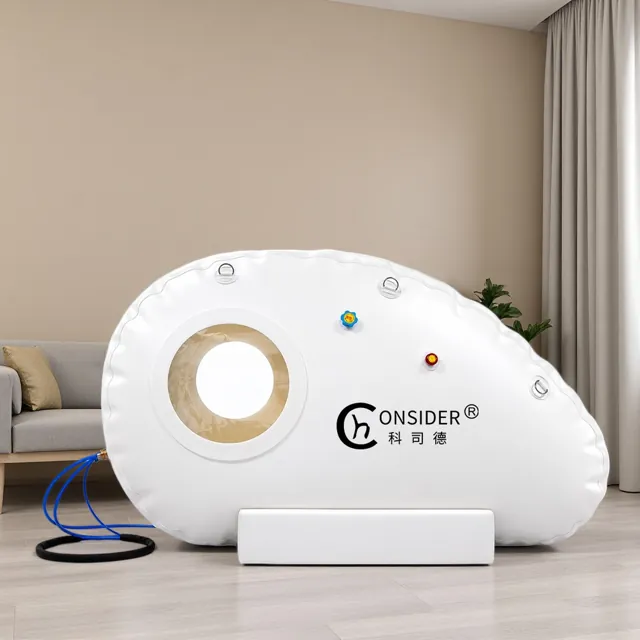
Soft chambers (often called mild hyperbaric therapy, or mHBOT) are portable, foldable systems built from medical-grade TPU with airtight zippers and an internal frame. They typically run at 1.3–1.5 ATA, install in a spare room and are operated by one person. Our soft lying and soft sitting ranges cover this category — including professional 2.0 ATA portable models such as the COSL20.
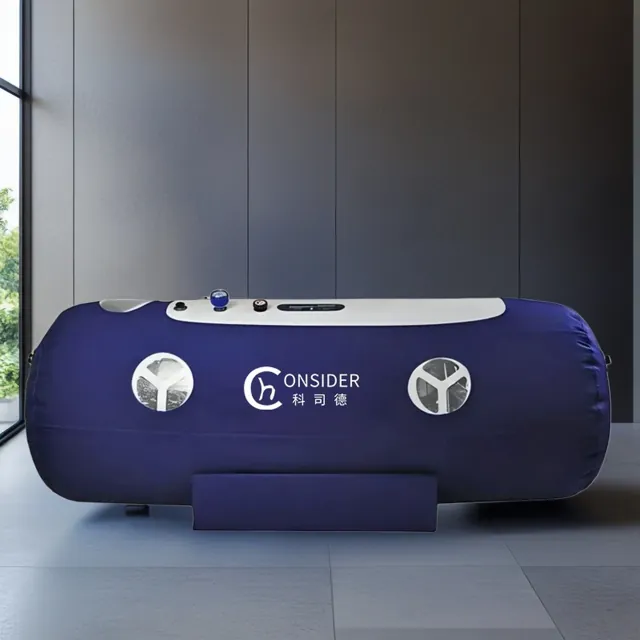
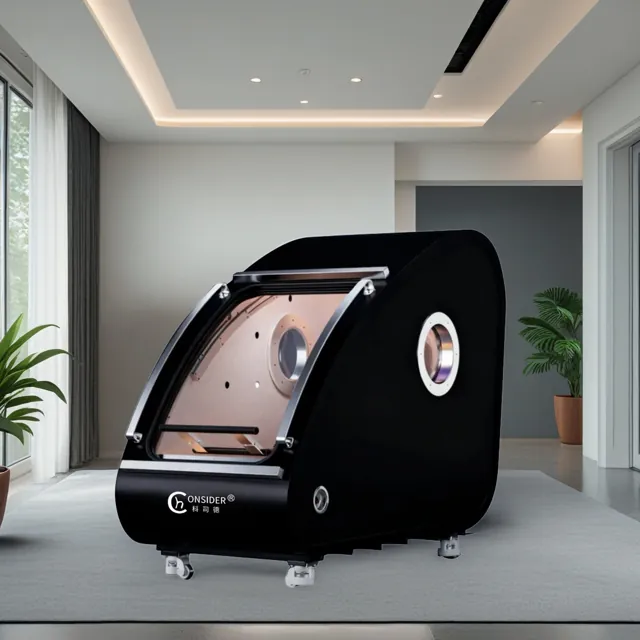
Hard-shell chambers are rigid carbon- or stainless-steel systems that reach up to 2.0 ATA, with integrated oxygen, climate control and dual control panels. They are the workhorse of clinics and premium facilities. Compare single-person and multiplace hard-shell systems to see the range.
Choose by Operating Environment
- Home or flexible room: start with a portable soft lying or sitting chamber.
- Recovery studio or wellness center: compare a professional soft system with a single-person hard-shell.
- Clinic with one-to-one sessions: plan around a fixed monoplace hard-shell system.
- High-throughput facility: size a multiplace chamber around room access and expected sessions per day.
For the purchasing trade-offs, use the dedicated soft vs hard-shell comparison; for terminology and pressure categories, use HBOT vs mHBOT.
What a Session Actually Feels Like
A home or wellness session typically includes gradual pressurization, time at the selected pressure and controlled depressurization. Many users plan 60–90 minutes at pressure, while professionally directed protocols may use different session lengths and schedules. Ear equalization and a slow pressure change are central to comfort. See what to expect during a session.
Who Uses Hyperbaric Therapy
- Home users building a daily wellness and recovery routine — see chambers for the home.
- Athletes and recovery studios adding it to training and sleep — see chambers for athletes.
- Wellness centers and spas offering it as a premium service — see chambers for wellness centers.
- Clinics and rehabilitation facilities — see chambers for clinics and for rehabilitation.
- Veterinary hospitals treating companion and large animals — see veterinary chambers.
How to Get Started
If this is your first chamber, a 1.3–1.5 ATA soft model is the comfortable, popular starting point; the COSL15 for lying sessions and the COSE15 for a more spacious sitting chamber are both easy first systems. If you are equipping a clinic or want clinic-grade 2.0 ATA pressure, look at the COHT20 or a multiplace COHB20. Our buyer's guide walks through every decision step by step.
Have a Question About Your Project?
Our team can recommend the right chamber for your market, space and pressure.